

Practice Areas
Estate Planning
Protect your family's future and your assets with a comprehensive estate plan that reflects your wishes and meets Texas legal requirements.
Experienced attorneys serving Richmond and Greater Houston since 1977. Call to discuss your case.
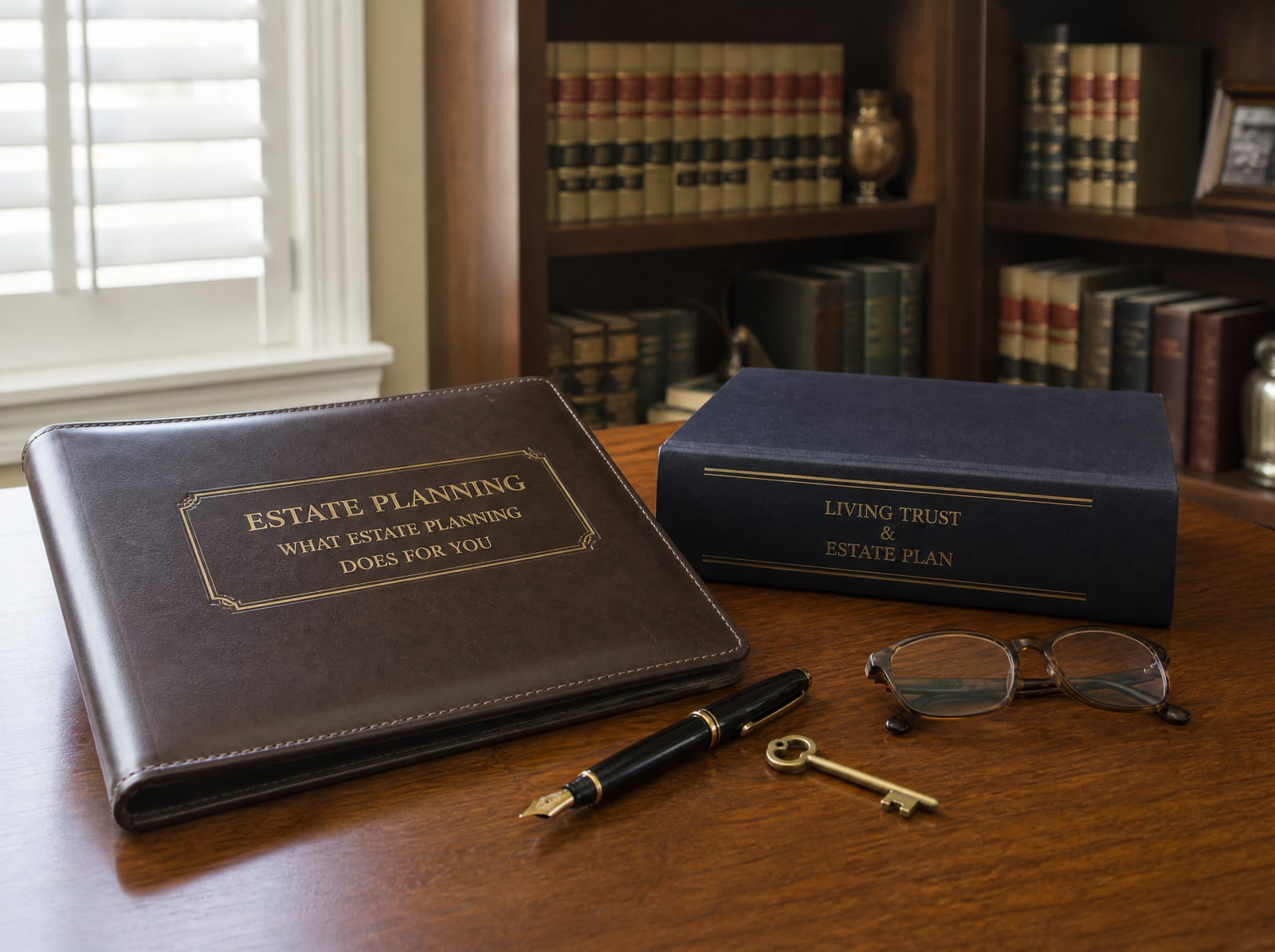
What Estate Planning Does for You
Estate planning gives you control over what happens to your property, your finances, and your healthcare decisions if you become incapacitated or pass away. Without a plan, Texas intestacy laws decide who gets your assets, and the courts may appoint someone you wouldn't have chosen to make medical decisions on your behalf. A properly drafted estate plan eliminates that uncertainty and spares your family unnecessary legal complications during an already difficult time.
At Showalter Colgin & Davis, PLLC, we prepare wills, trusts, powers of attorney, medical directives, and related documents that work together to protect your interests. We've served families throughout Houston, Sugar Land, Katy, Rosenberg, Pearland, Missouri City, and Stafford since 1977. Whether your estate is simple or involves complex assets, we tailor each plan to your specific circumstances and family structure.
You get documents that clearly express your intentions, reduce potential conflicts among heirs, and stand up under legal scrutiny. We explain each option in plain language so you understand exactly what you're signing and why it matters.

Why Estate Planning Matters
A comprehensive estate plan protects your family from probate delays and legal disputes. When you have a valid will or trust in place, your executor or trustee can distribute assets according to your wishes without waiting for a court to make those decisions. This speed matters when your spouse or children need access to funds for living expenses, mortgage payments, or other obligations.
Planning also minimizes estate taxes and preserves more of your wealth for your beneficiaries. Texas doesn't impose a state estate tax, but federal estate tax still applies to larger estates. Strategic use of trusts, charitable gifts, and other tools can reduce or eliminate that tax burden.
If you have minor children, estate planning lets you designate guardians who will raise them if both parents are unable to do so. Without that designation, the court decides who takes custody based on its own assessment of the child's best interest.
For business owners, an estate plan addresses succession and continuity. You can outline how your interest in the company transfers, who manages operations during a transition, and whether the business gets sold or remains in the family. Addressing these issues in advance prevents operational paralysis and protects the value you've built over the years.
How the Estate Planning Process Works
We follow a structured approach that starts with understanding your goals and ends with fully executed documents you can rely on.
 1
1Initial Consultation and Goal Setting
We meet with you to discuss your family structure, asset inventory, and specific concerns. You tell us who you want to benefit from your estate, who should make decisions if you're incapacitated, and any special circumstances we need to address. We review any existing documents you have and identify gaps or outdated provisions.
 2
2Document Drafting and Review
Based on your instructions, we prepare a complete set of estate planning documents. This typically includes a will, durable power of attorney, medical power of attorney, HIPAA authorization, and a directive to physicians. If a trust is appropriate, we draft trust documents and explain how to fund the trust with your assets. We send you drafts for review and schedule a meeting to walk through each provision in detail.
 3
3Execution and Safekeeping
Once you approve the final versions, we arrange a signing ceremony where you execute the documents in compliance with Texas law. Wills require two witnesses and a notary, while trusts and powers of attorney need notarization. We provide guidance on storing the originals and distributing copies to relevant parties such as your executor, trustee, or healthcare agent.
 4
4Ongoing Updates and Maintenance
We recommend reviewing your estate plan every few years or after major life events like marriage, divorce, the birth of a child, or a significant change in assets. We keep your file on hand and can quickly revise documents as needed.
Key Estate Planning Documents
A last will and testament names an executor to manage your affairs, identifies beneficiaries, and specifies how you want your property distributed. If you have minor children, your will designate guardians and may establish testamentary trusts to manage inheritances until the children reach a certain age. A will only takes effect after your death and must go through probate, but it provides clear instructions that reduce the likelihood of family disputes.
Trusts offer greater flexibility and control. A revocable living trust lets you transfer assets into the trust during your lifetime, appoint yourself as trustee, and name successor trustees who take over if you become incapacitated or pass away. Because trust assets bypass probate, your beneficiaries can access them more quickly and with less public disclosure. We help you determine whether you need a trust based on the size of your estate, your privacy concerns, and your family's specific needs.
A durable power of attorney authorizes someone to handle financial matters on your behalf if you're unable to do so yourself. This includes paying bills, managing investments, filing taxes, and dealing with banks or government agencies. Without this document, your family may need to seek a court-appointed guardianship, which is time-consuming and expensive.
Medical powers of attorney and directives to physicians address healthcare decisions. A medical power of attorney names an agent to make treatment choices if you're incapacitated, while a directive to physicians (also called a living will) states your preferences regarding life-sustaining treatment. These documents give your family clear guidance and prevent conflicts over what you would have wanted.

Special Considerations for Blended Families
Blended families face unique challenges when balancing a current spouse's needs with children's inheritance rights from a previous relationship. Texas community property laws complicate matters because assets acquired during your current marriage are owned equally by both spouses, regardless of whose name is on the title.
A common solution is to create a trust that provides income to your surviving spouse for life, with the principal passing to your children after your spouse's death. This arrangement, known as a qualified terminable interest property (QTIP) trust, ensures your spouse is financially supported while preserving your children's eventual inheritance.
Prenuptial and postnuptial agreements can also define what constitutes separate property versus community property and can waive certain inheritance rights. If you already have a marital agreement, we review it to make sure your estate plan complies with its terms.
We encourage clients to discuss their estate plan with both their spouse and their children to manage expectations and reduce the risk of disputes. While these conversations can be uncomfortable, they often prevent misunderstandings that lead to litigation and fractured family relationships.


Estate Planning for High-Net-Worth Families
If your estate exceeds the federal estate tax exemption, you need strategies to minimize tax liability. Irrevocable life insurance trusts, charitable remainder trusts, and family limited partnerships are common tools for transferring wealth while reducing or deferring estate and gift taxes.
Gifting strategies allow you to transfer wealth during your lifetime and take advantage of annual gift tax exclusions and lifetime exemption amounts. By making strategic gifts now, you reduce the size of your taxable estate and may allow your beneficiaries to benefit from asset appreciation outside of your estate. We coordinate with your accountant and financial advisor to implement gifting strategies that don't jeopardize your own financial security.
High-net-worth families often own multiple properties, investment portfolios, closely held businesses, and collectibles or other non-liquid assets. Valuing these assets and planning for liquidity to pay estate taxes and administrative expenses requires careful attention. We work with appraisers and other experts to establish accurate valuations and identify assets that can be sold or borrowed against without disrupting your family's long-term financial plans.
Multi-generational planning through generation-skipping transfer trusts can pass assets to grandchildren or later generations while avoiding estate taxes at each generational level. These trusts require precise drafting to comply with complex tax rules, but they offer significant benefits for families interested in creating a lasting legacy.
Why Choose Our Firm for Estate Planning
Our experience spans simple wills for young couples to complex estate plans involving multiple trusts, business succession issues, and elder law concerns. We've seen how poorly drafted documents can lead to probate litigation and family conflict, and we work proactively to prevent those problems.
Our firm also handles real estate matters, intellectual property, and eminent domain cases, which gives us a broader perspective on how different areas of law interact with estate planning. If you own investment property, hold patents or trademarks, or face property rights issues, we can address those concerns within your estate plan rather than referring you to multiple attorneys.
You work directly with an attorney throughout the process, not a paralegal or document preparer. We take time to understand your family relationships and financial situation before recommending any strategy. We're available to answer questions after your plan is complete, and we maintain your files for future updates.

Frequently Asked Questions About Estate Planning
What happens if I die without a will in Texas?
Texas intestacy laws determine how your assets are distributed. If you're married, your spouse receives all community property and may share separate property with your children or parents, depending on who survives you. If you're unmarried, your children inherit everything, or if you have no children, your assets go to your parents or siblings. The court appoints an administrator to handle your estate, which can be more expensive and time-consuming than probate with a will. Intestacy also means you have no say in who raises your minor children or manages their inheritance.
Can I change my estate plan after it's completed?
Yes, you can amend or revoke your estate planning documents at any time as long as you're mentally competent. For a will, you can create a codicil to modify specific provisions or draft an entirely new will that supersedes the old one. For a revocable living trust, you can amend the trust document or restate the entire trust. Powers of attorney can be revoked by written notice to your agent and any institutions that received copies.
How do beneficiary designations interact with my will?
Beneficiary designations on retirement accounts, life insurance policies, and payable-on-death bank accounts supersede your will. These assets transfer directly to the named beneficiaries outside of probate. If your will leaves everything to your spouse but your 401(k) still lists your ex-spouse as beneficiary, your ex-spouse receives the retirement account regardless of what the will says. We review all beneficiary designations during the planning process and recommend changes to align them with your goals.
What's the difference between a will and a trust?
A will takes effect only after your death and must go through probate, which is the court-supervised process of validating the will, paying debts, and distributing assets. A trust can take effect during your lifetime and allows you to transfer assets to beneficiaries without probate. Trusts provide more privacy because they're not filed with the court, and they offer greater control over how and when beneficiaries receive their inheritance.
Do I need an estate plan if I don't have much money?
Estate planning is about more than just wealth. If you have minor children, you need a will to designate guardians. If you own a home or other real estate, you need a plan to transfer that property without forcing your family through a lengthy probate process. Powers of attorney and medical directives are relevant regardless of your net worth because they address decision-making authority during incapacity.
What role does an executor play?
The executor, also called a personal representative, is responsible for managing your estate after your death. This includes locating assets, notifying creditors, paying debts and taxes, and distributing property to beneficiaries according to your will. The executor also files the will with the probate court and represents the estate in legal proceedings if necessary. You should choose someone who is organized, trustworthy, and willing to take on the responsibility.
How do I handle estate planning if I own a business?
Business owners need to address succession and valuation in their estate plan. If you want the business to continue operating, you should identify who will take over management and whether other family members will receive ownership interests or equivalent value in other assets. A buy-sell agreement can establish a valuation formula and create a market for your ownership interest. If you're a partner or shareholder in a company, existing agreements may dictate what happens to your interest at death, so we review those documents and coordinate your estate plan accordingly.
Can I disinherit a family member?
In Texas, you can disinherit anyone except your spouse. Community property laws give your spouse certain rights to assets acquired during the marriage, but you have broad discretion over separate property and can exclude children or other relatives from your will. To avoid confusion or legal challenges, we recommend stating explicitly that you're excluding someone rather than simply omitting their name. If you anticipate a will contest, we can include a no-contest clause that penalizes any beneficiary who unsuccessfully challenges the will.
Schedule An Attorney Consultation
Fields marked with an asterisk are required.
Discuss your estate planning matter
Contact Showalter Colgin & Davis at (281) 341-5577 to speak with an attorney. We serve property owners, businesses, and families throughout the Greater Houston area.